Advanced Research Projects Agency - Energy (ARPA-E)
My small tiger team redefined the digital strategy and modernized the online presence at ARPA-E, the disruption wing of the US Department of Energy.
The Challenge
ARPA-E was tasked with the creation of a new, modern brand that better represented the groundbreaking work they do at the agency. The brand launch would accompany a new website that was easier to use, streamlined, and secure.
About the Project
The Process
We started the process with a series of UX interviews and research. Using the input from employees, fellows, the public, and stakeholders in the scientific community, we got to work rebuilding the website architecture. I conducted a thorough audit of their content, walked through the process of deciding what to keep and consolidate, and developed a streamlined content strategy based on our end-to-end user research.
The Result
In early 2025 ARPA-E unveiled their new, modern website. Featuring updated branding and built securely in an up-to-date version of Drupal, the website focused on accessibility, efficiency, and the ability to scale. I wrote a new style guide to streamline posts from multiple authors, and checklists to ensure new content was optimized for search engines. The result was a notable uptick in site usage with a 38% increase in page views.
UX Writing
An example of some of the UX writing I did in ARPA-E’s digital transformation
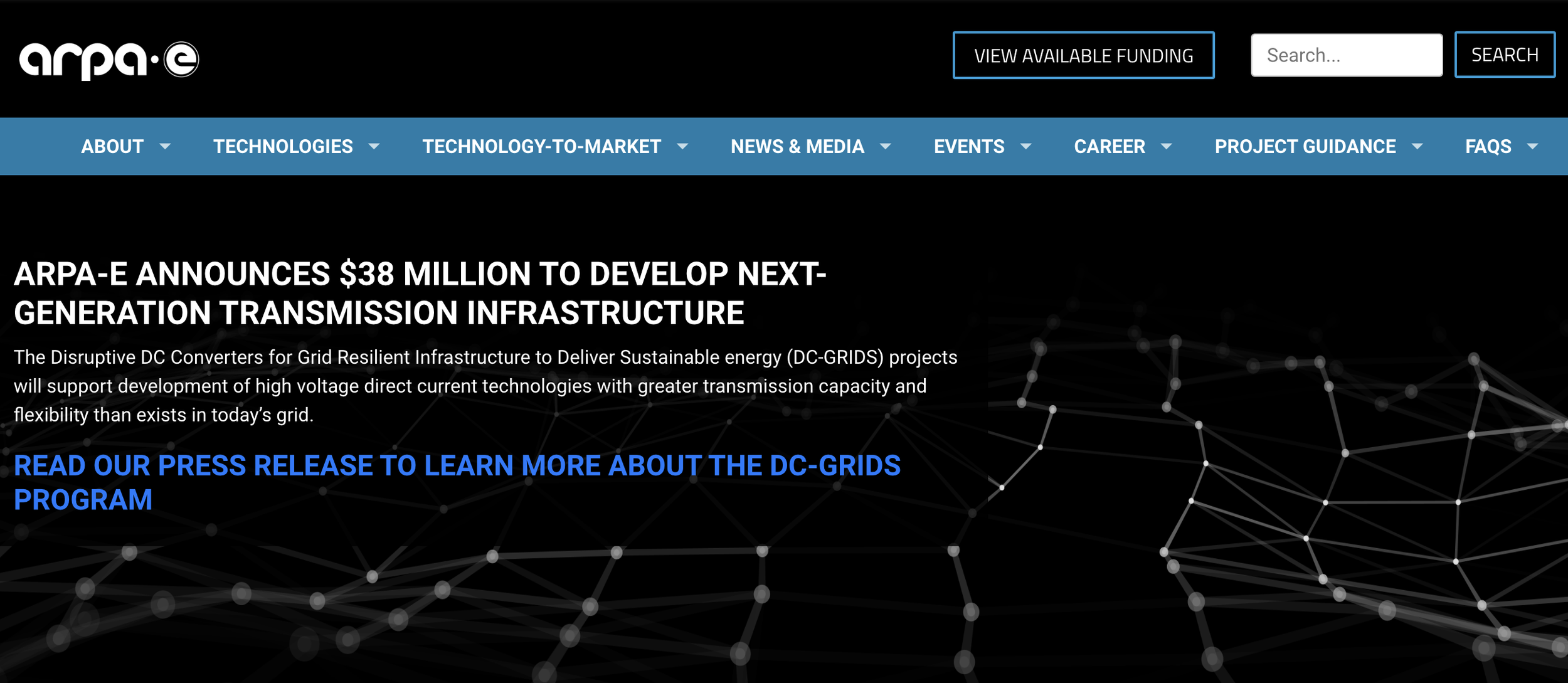
Before
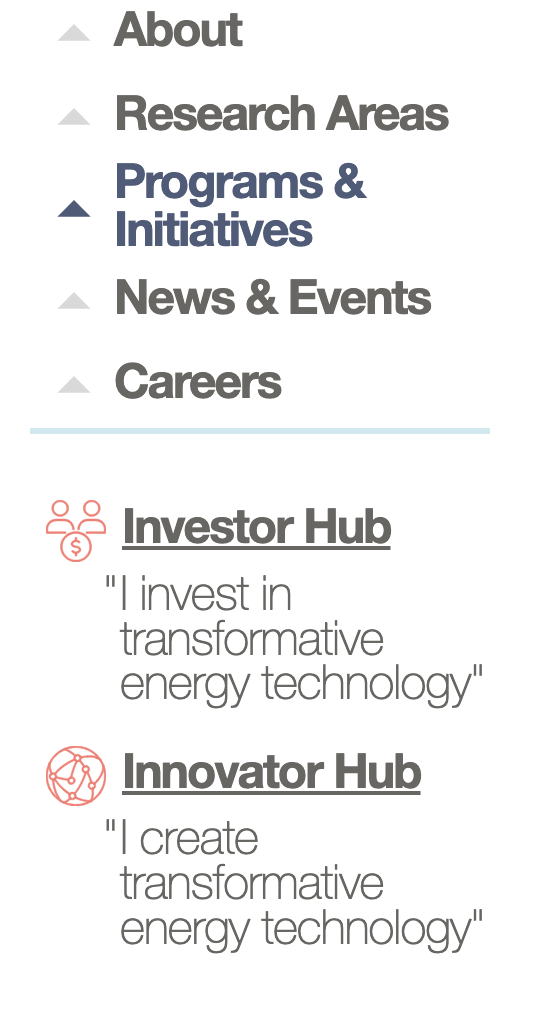
After
The Challenge
ARPA-E’s menus were cluttered and overcomplicated. After many years the categories grew disorganized. Users couldn’t find what they were looking for.
Our Solution
We streamlined the menu from eight items to five and created specific “hubs” that catered to the needs of their main audiences: Investors and Innovators.
How I Helped
Devised the concept and language for audience hubs in collaboration with our UX designer
Audited content to create more efficient menu categories
Wrote microcopy for each hub
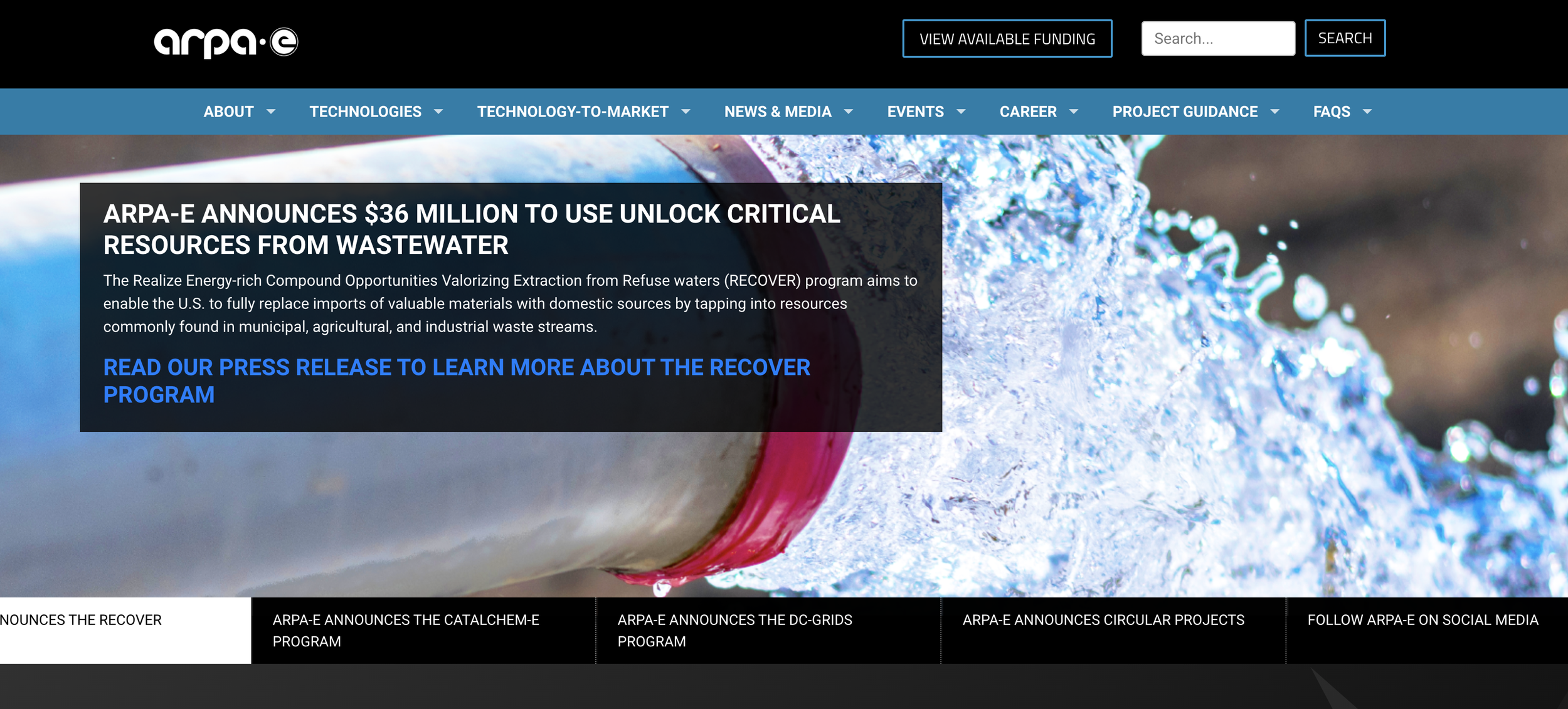
The ARPA-E homepage before the modernization project
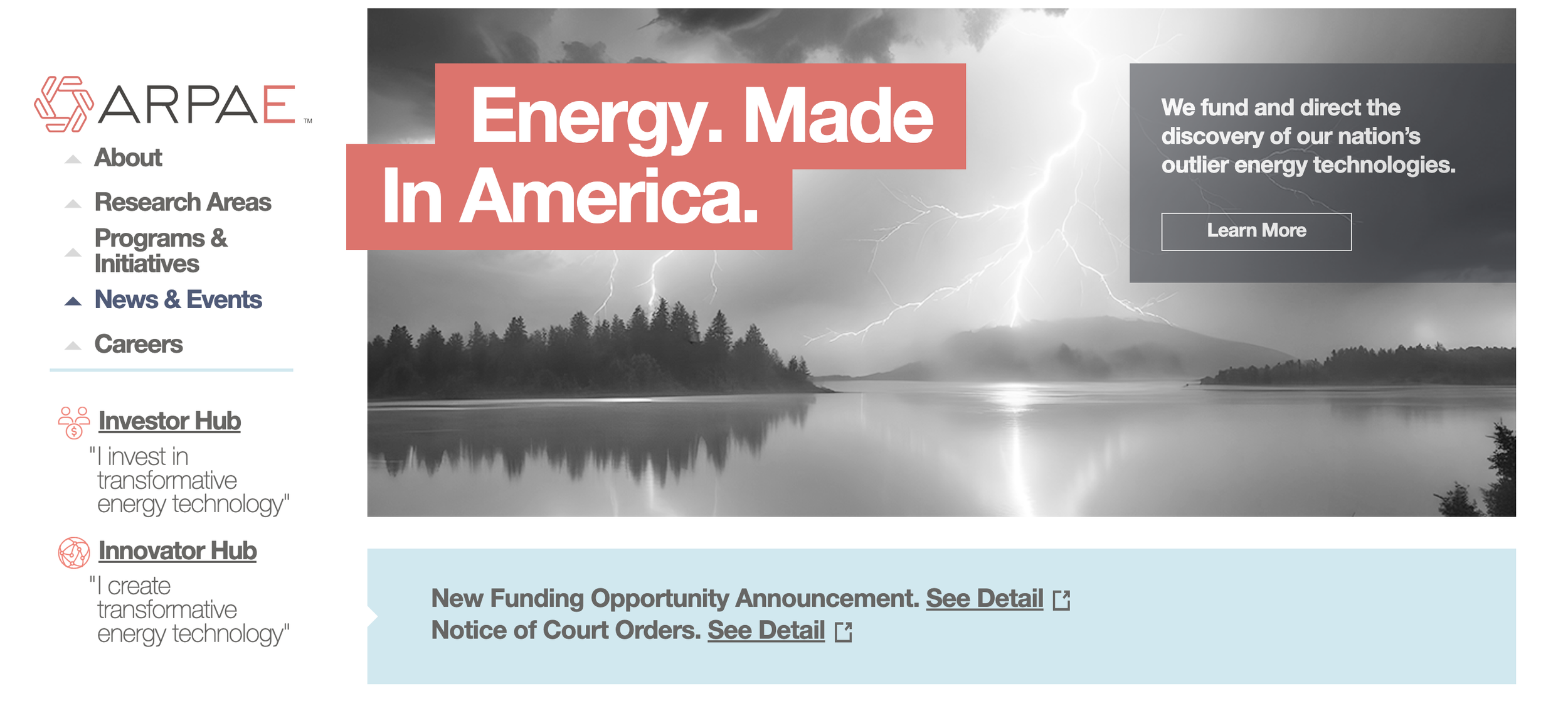
The new ARPA-E homepage features a streamlined menu, audience hubs, and bold headlines that speak to their innovative mission.
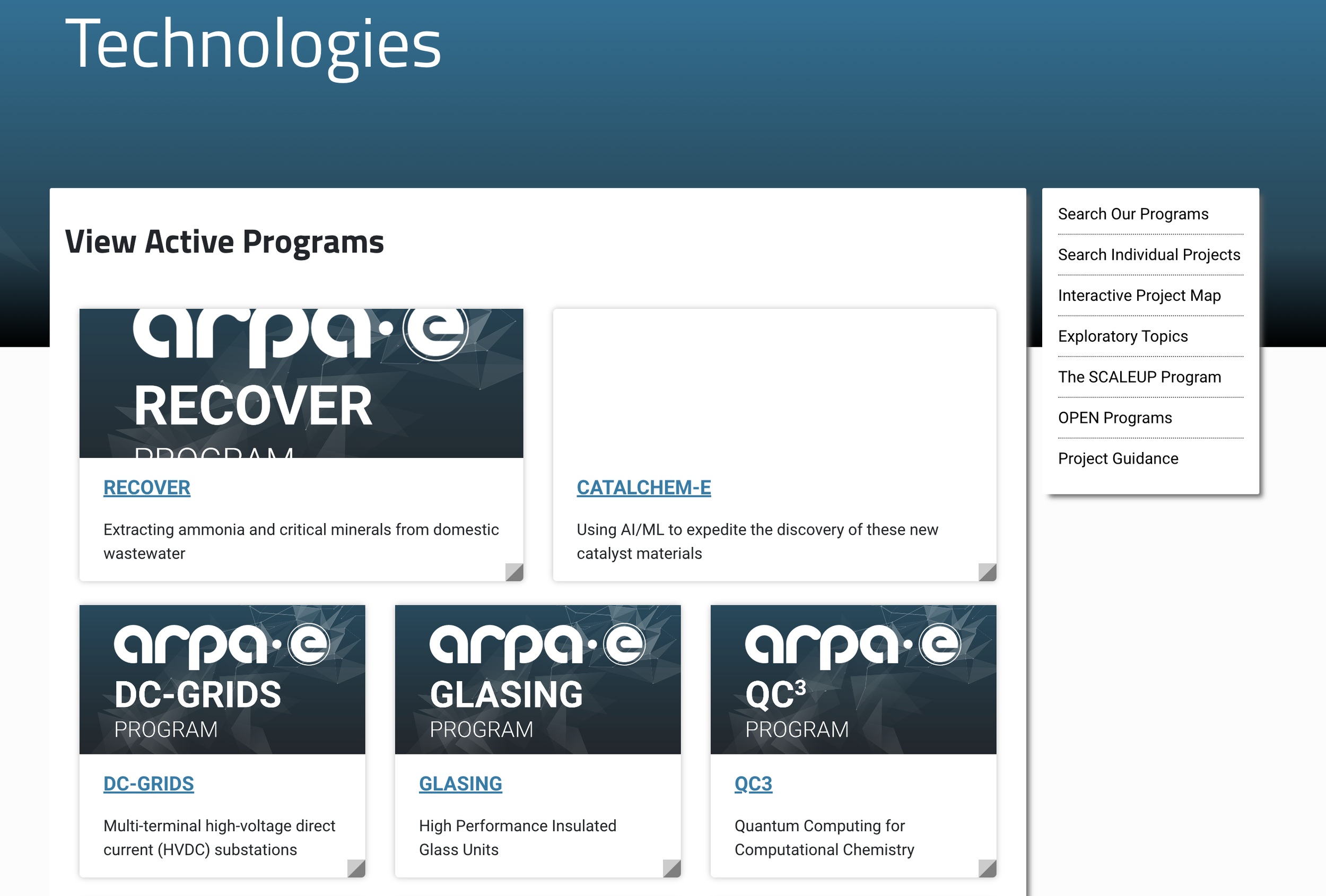
An internal page on the previous version of the ARPA-E website where research areas were showcased by project.
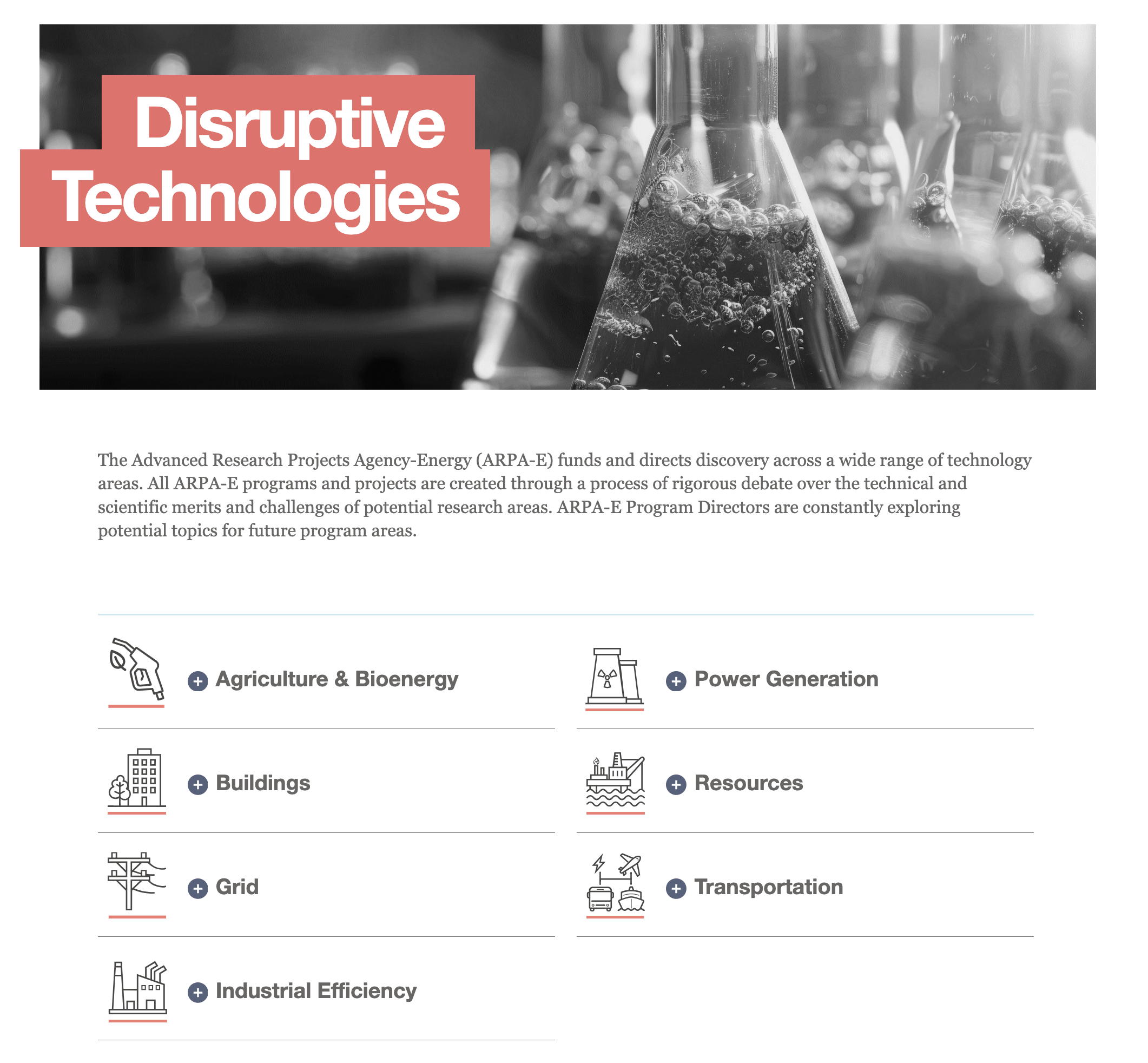
A new internal page on ARPA-E's website that shows reorganized research areas, which we devised using staff and user interviews, market research, and a content audit.
Deliverables
-
I wrote this brand story to accompany our graphic designer’s work and guide the digital transformation.
Created in 2007, the U.S. Department of Energy’s Advanced Research Projects Agency—Energy (ARPA-E), was a solution to the National Academies’ 2006 report Rising Above the Gathering Storm. In the time of great uncertainty in the shadows of 9/11, this report outlined a foreboding loss of U.S. advantages in science and technology and called for decisive action from lawmakers.
After receiving charter funding in 2009, ARPA-E set out to transform the global energy landscape by supporting pioneers in new energy technologies. Thirteen years and $3.76 billion in R&D funding later, ARPA-E sought to update its identity to reflect the shift from its reactive founding to its proactive, future-oriented leadership in the global energy space.
The new ARPA-E brand identity represents the agency’s forward momentum and positive outlook on the global energy sector. A new, streamlined typeface brings it into the modern era, while also symbolizing ARPA-E’s transition from start-up agency to pioneering and influential industry expert.
A major part of the ARPA-E branding, the “e,” is now more dynamic. The new “E Turbine” represents progress and movement, while also offering a nod to the very beginnings of energy generation. The logo signifies ARPA-E’s commitment to boldly crafting new pathways in service of a brighter, more efficient future.
-
• Comprehensive site map with a color-coded information architecture system.
• Audit spreadsheet that accounted for every page of the site with analytics data for each URL for informed decision making.
-
I left ARPA-E with tools to maintain their new, streamlined content. This included:
A new style guide they could build upon
A search engine optimization (SEO) checklist
A new content strategy